Refrigerated Vans For Food Producers
Joe Dickman | October 1st, 2026
It’s 4:30 in the morning and the van is loaded: sandwich loaves on the rack, trays of cream puffs and cheesecakes stacked behind them, and fourteen coffee shops, cafes, and grocery accounts waiting before they open. By the sixth stop the sun is up. By the tenth, the doors have opened and closed a dozen times. Whether those cream puffs arrive the way they left the kitchen depends almost entirely on the vehicle carrying them.
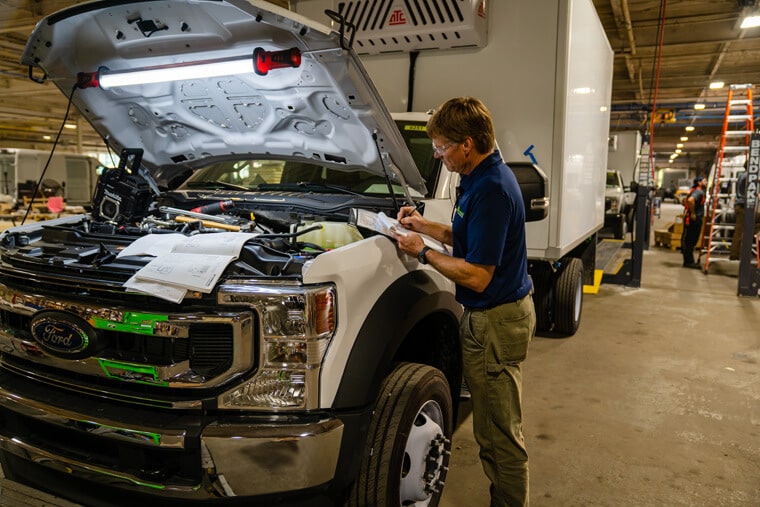
Bakeries and prepared food producers run some of the earliest, tightest delivery schedules in food distribution. Emerald Transportation Solutions builds refrigerated vans for wholesale bakeries, commissary kitchens, meal prep companies, and specialty food makers who deliver their own product and need it to arrive looking and tasting right.
Refrigerated Vans for Bakeries: Why Mixed Loads Are the Real Challenge
Most bakery routes carry products that want completely different conditions. Bread and rolls actually go stale faster in the refrigerator, so crusty loaves are usually better off at room temperature. Cream-filled pastries, custard pies, cheesecakes, and anything topped with fresh fruit or cream cheese frosting need to stay cold. Frozen dough and par-baked goods need to stay frozen.
A standard delivery van forces a compromise. A partitioned refrigerated van doesn’t. Using a bulkhead or separate compartments, one vehicle can keep a cold zone for cream and dairy-based items while bread rides in its own section, and a freezer-capable zone can handle frozen dough when your route needs it. One trip, every product at the right temperature.
Built for Early-Morning, Multi-Stop Routes
Bakery deliveries are short hops with lots of stops. Every time the doors open, warm air rushes in, and a refrigeration system that recovers slowly will fall further behind with each stop. By the end of the route, product in the back can be sitting several degrees warmer than it should be.
Emerald builds every refrigerated vehicle to exceed ATP certification standards. ATP is a recognized international test of how well the insulated body and refrigeration system hold temperature. In plain terms, that means a van that pulls back down to temperature quickly between stops, so your last account gets the same quality as your first.
Prepared Food Producers and Meal Prep Operations
Commissary kitchens, meal prep services, and producers supplying grab-and-go cases at convenience stores and markets face a stricter version of the same problem. Cooked and cooled food has to stay cold from your kitchen to the customer’s cooler, and many wholesale buyers check product temperature when it comes off the truck. A delivery that arrives warm can be refused on the spot.
If you’re launching or growing a direct delivery program, our guide to starting a meal kit delivery business covers the operational side. For producers who also deliver hot food, Emerald can configure vehicles for insulated hot food transport as well.
Shelving, Racks, and an Interior That Fits How You Load
Baked goods don’t stack like cases of canned goods. Sheet pans, bakery racks, cake boxes, and bread trays each load differently, and a layout that doesn’t fit your products means crushed boxes and wasted space. Choosing the right body size is the first step:
- Compact refrigerated vans suit small bakeries running a handful of cafe and coffee shop accounts each morning.
- Full-size vans handle larger wholesale routes with a mix of bread, pastries, and prepared items.
- Mid- and high-roof vans give drivers room to stand up while loading rolling racks and reaching upper shelves, which saves real time on a route with many stops.
With custom order availability, Emerald can build around the way your team actually loads, whether that means a specific partition layout, a cold zone sized to your cream and dairy items, or an interior that’s easy to wipe down at the end of the day. See how Emerald approaches customizing a refrigerated van to your business.
Keeping Daily Route Costs in Check
A bakery van runs the same route five, six, sometimes seven days a week. Small savings on each trip add up quickly. Emerald’s VEA Wind Deflector reduces aerodynamic drag on highway stretches between your kitchen and outlying accounts, and well-insulated ATP certified bodies mean the refrigeration unit doesn’t have to work as hard to hold temperature. Both help keep fuel and wear costs predictable on routes that never take a day off.
Nationwide Delivery from Georgia
Emerald works with bakeries and food producers across the country from facilities in Fayetteville, Georgia and Griffin, Georgia, with delivery nationwide. Whether you’re adding your first refrigerated van or expanding to a second route, our team can help you match the vehicle to your products, stop count, and schedule.
Questions About Refrigerated Vans for Bakeries and Food Producers?
Should bread be delivered in a refrigerated van?
Usually not in the cold zone. Refrigeration speeds up staling in most breads, so loaves and rolls generally travel better at room temperature. A partitioned van lets you keep bread in its own section while cream-filled pastries, cheesecakes, and dairy-based items ride in the refrigerated zone.
What temperature should cream-filled pastries and prepared foods stay at during delivery?
Food safety guidance for cold-held foods calls for 41°F or below. Products like custards, cream fillings, cheesecakes, and cooked prepared meals fall into that category. A refrigerated van that recovers quickly after door openings helps you stay under that line through every stop on the route.
What size refrigerated van does a bakery need?
It depends on your stop count, product mix, and how you load. A small bakery serving a few cafes may do well with a compact van, while a wholesale operation running racks and sheet pans usually benefits from a full-size or high-roof van. Emerald can look at your route and recommend the right size.
Can Emerald set up a van around bakery racks and trays?
Yes. Custom order availability means Emerald can configure partitions, temperature zones, and the interior layout around how your team loads and unloads, instead of making your products fit a generic van.
Ready to find the right refrigerated van for your bakery or food production route? View Emerald’s current inventory or contact us to talk through a custom build.


Contact Us
Feel Free To Contact Us If You Have Any Questions
What does under DOT mean?
Questions regarding DOT requirements come up often. 10,000 lbs GVW (gross vehicle weight) and over are commercial vehicles that fall under the Department of Transportation regulatory requirements.
What is the difference between GVW and payload?
GVW or Gross Vehicle Weight is the entire weight of the vehicle including the payload. The payload weight represents the amount of cargo you are hauling.
What is a self-powered unit and a vehicle-powered unit?
A self-powered unit has its own fuel source and will run independent of the truck. This is the heaviest and most expensive option. While vehicle-powered units run off the engine via a compressor mounted on the engine. These are less expensive and lighter in weight but you must run the truck or plug the electric standby into shore power.
What does K-factor mean and why is that important?
K-factor is a term that stands for the overall insulating value of the container (truck body). Quite simply the lower the K-factor the better the truck body will be able to maintain a given temperature and require less energy to do so.
How much lighter is a Poly Van vs a US spec body?
Poly Van bodies are very light. On average we estimate we are 75-150 lbs per foot lighter than a traditional sheet and post foamed in place body. These weight savings translates to less fuel burn and less CO2 emissions, along with added payload, the most important benefit.